

If you’ve ever looked at carbs in flatbread, you’ve probably realized there isn’t a single straightforward answer. It really depends on the type you’re eating. Ingredients, thickness, size, and even the brand all play a role.
Because of that, the most reliable way to compare flatbread with regular bread is to check the serving size and read the Nutrition Facts label rather than assuming one is automatically lower in carbs.
The carb content in flatbread can vary quite a bit depending on the style. A small, thin flatbread typically has fewer carbs than larger, denser options like naan or thick bakery-style varieties such as focaccia.
That’s why it’s more accurate to think about flatbread carbs in terms of a specific serving instead of “one piece.” Looking at weight and total carbohydrates on the label provides a much clearer comparison.
For example, Absolutely Gluten Free Flatbreads contain 12 g of total carbohydrates per two-piece (14 g) serving.
| Food | Example Serving | Total Carbohydrates |
| Absolutely Gluten Free Flatbreads | 2 pieces (14 g) | 12 g |
| Regular bread | Varies by brand and slice size | Check Nutrition Facts |
| Naan | Varies by size and recipe | Check Nutrition Facts |
| Focaccia | Varies by portion and recipe | Check Nutrition Facts |
If you want to explore further, USDA FoodData Central is a helpful resource for comparing nutrition across different foods.
Whether you’re searching for flat bread carbs or simply trying to understand what’s in a serving, the key takeaway is simple: portion size matters most.
Several basic factors can influence the carb content of flatbread:
For the most accurate information, always refer to the Nutrition Facts panel on the specific product you’re eating.
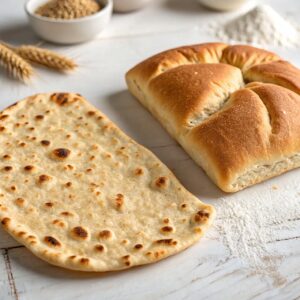
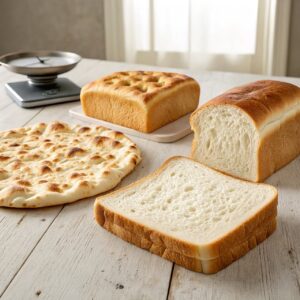
When comparing carbs in flatbread vs. regular bread, flatbread isn’t automatically the lower-carb option.
A thin flatbread may seem lighter than a slice of bread, but that can be misleading. A large naan or thick piece of focaccia can easily weigh more than a standard slice of sandwich bread and may contain more carbohydrates as a result.
The most accurate comparison is always serving to serving. Be sure to look at total carbohydrates, serving weight, and how much you actually plan to eat.
There’s no universal “better” choice. It really depends on the product, the portion, and your personal needs.
Not necessarily. Gluten-free and lower in carbs are not the same thing. Gluten is a protein found in wheat, rye, barley, and triticale. A product can be gluten-free and still include carbohydrate-rich ingredients like rice flour, potato starch, or tapioca starch.
The Celiac Disease Foundation explains that gluten is found in certain grains, while many gluten-free ingredients are still naturally high in starch.
So when comparing carbs, it’s important not to rely on the “gluten-free” label alone. The Nutrition Facts panel remains the most dependable source.
Looking for a gluten-free option? Explore our Absolutely Gluten Free Flatbreads lineup.
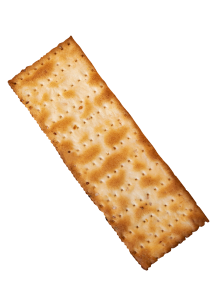
Absolutely Gluten Free makes thin, crisp flatbreads that are perfect for snacking, dipping, sharing, or building simple, flavorful bites.
Our current flatbread lineup includes:
Based on current Nutrition Facts, each variety contains 70 calories and 12 g of total carbohydrates per two-piece (14 g) serving.
Want to explore more gluten-free options? Discover our full range of delicious gluten-free products—from crackers and flatbreads to snacks and more.
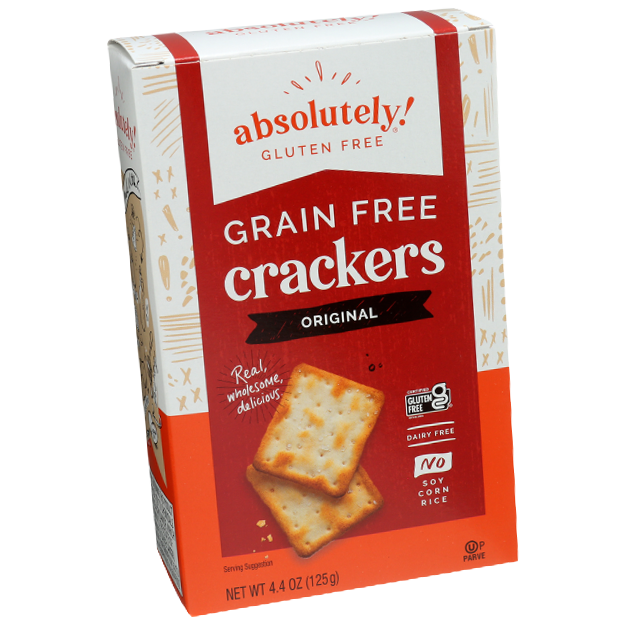
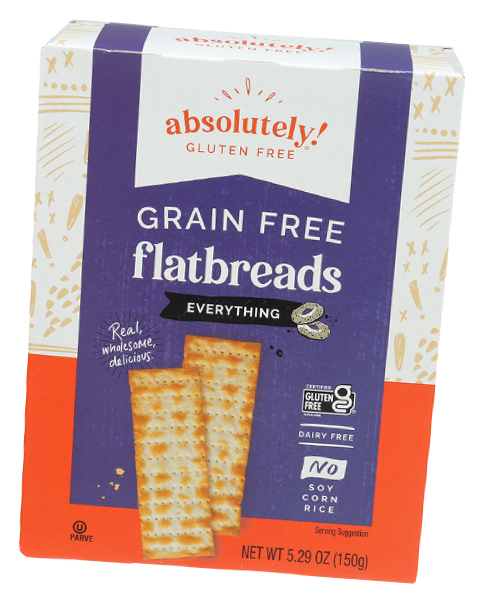
Note: As always, check the package for the most up-to-date serving size, ingredients, allergen information, and nutrition details.
It depends on the ingredients, type, size, and serving. Always check the Nutrition Facts panel for the specific product. Absolutely Gluten Free Flatbreads contain 12 g of total carbohydrates per two-piece (14 g) serving.
Not necessarily. Gluten-free means the product doesn’t contain gluten, but it doesn’t automatically mean it’s lower in carbohydrates. Many gluten-free flatbreads still use ingredients like rice flour, potato starch, or tapioca starch, which contain carbs. The Nutrition Facts label is the most reliable way to know for sure.
Flatbread pairs well with hummus, dips, cheese, vegetables, spreads, smoked salmon, guacamole, soups, salads, and snack boards. It’s also great for quick appetizers and easy snacks. For more ideas, explore our gluten-free recipe collection.


