
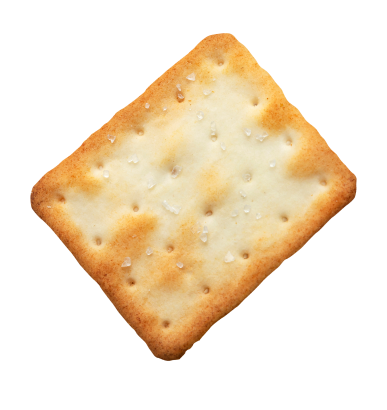
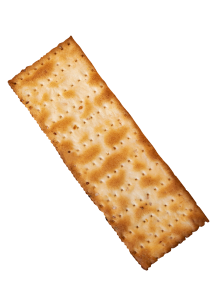
Are crackers gluten-free? Most traditional crackers aren’t, since they’re typically made with wheat flour. That said, there are plenty of gluten-free crackers made from ingredients like potato, rice, corn, seeds, or legumes. To choose with confidence, look for a clear gluten-free label and read the full ingredient list.
This guide explains why many crackers contain gluten, how wheat-free crackers differ from gluten-free ones, what to check on labels, and where to find crackers for snacking, dipping, and sharing.
Many crackers do contain gluten, especially those made with wheat. On ingredient lists, wheat can appear under several different names.
Common gluten-containing ingredients include:
Oats are a bit different. While they don’t naturally contain gluten, they’re often processed in facilities that also handle wheat, barley, or rye. If you’re avoiding gluten, look for oats labeled gluten-free.
It’s also important to remember that seasonings and flavor blends can include gluten, so always check the full ingredient list.
To make choosing easier, use this simple checklist when evaluating crackers.
Start with the package and look for a clear gluten-free claim.
In the United States, foods labeled “gluten-free,” “free of gluten,” “without gluten,” or “no gluten” must meet FDA standards, meaning they contain less than 20 parts per million (ppm) of gluten.
While third-party certification isn’t required, products must still meet these standards to use the label.
Next, review the full ingredient list rather than relying on the product name or front label.
Even crackers described as potato-based, rice-based, or multigrain can still include wheat, barley, or malt.
In the U.S., wheat must be listed as a major allergen when present. However, this doesn’t cover all gluten sources.
Barley, rye, and malt may still appear in the ingredient list without being highlighted, so it’s important to check both the allergen statement and the ingredients.
Some brands use third-party gluten-free certifications, which may involve additional testing or production checks.
While certification can offer extra reassurance, standards vary between organizations.
For more details about Absolutely Gluten Free products, visit the Absolutely Gluten Free FAQ and check the latest packaging.
Cross-contact can occur when gluten-free foods are made in facilities that also process gluten-containing ingredients.
Even though products labeled gluten-free must meet FDA standards, it’s still wise to review packaging carefully.
Finally, remember that ingredients and manufacturing processes can change.
Even if you’ve purchased a product before, take a moment to check the label each time.
Not always. Crackers that are “wheat-free” don’t contain wheat, but they can still include other gluten sources like barley, rye, or malt.
Here’s how the labels compare:
| Label | What it means | What it does not guarantee |
| Wheat-free | The product does not contain wheat ingredients. | It may still contain barley, rye, malt, or other gluten sources. |
| Gluten-free | The product meets FDA requirements for gluten-free labeling. | It doesn’t describe overall nutrition. |
| Certified gluten-free | A third party has verified the product meets its certification standards. | Standards may vary by organization. |
When your goal is to avoid gluten, focus on the gluten-free claim rather than relying only on a wheat-free claim.
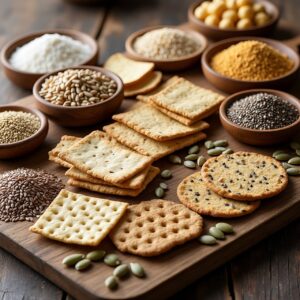
These crackers can be made from a wide range of ingredients, each contributing different textures and flavors.
Common options include:
Despite its name, buckwheat is naturally gluten-free—but it’s still important to check the label.
These ingredients also affect texture. Potato-based crackers are often light and crispy, while seed- or legume-based crackers tend to be heartier.
For more details, check out our guide to what these crackers are on this link.
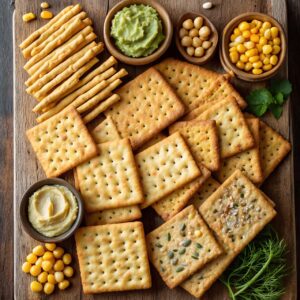
Not necessarily. “Gluten-free” simply means the product doesn’t contain gluten—it doesn’t automatically make it healthier.
When comparing crackers, consider:
Ultimately, the best choice depends on your personal preferences and dietary needs.
Gluten-free snacks and crackers are widely available at grocery stores, specialty shops, and online retailers, though availability may vary by location.
Use our store locator to find retailers near you that may carry Absolutely Gluten Free crackers.
Most traditional crackers contain gluten because they’re made with wheat flour. However, many gluten-free crackers are available, made with ingredients like potato, rice, corn, seeds, or legumes.
To choose the right option, look for a gluten-free label, read the ingredient list, and don’t assume that wheat-free means gluten-free.
For options for dipping, sharing, or everyday snacking, explore Absolutely Gluten Free Crackers or use the Find Us page to locate them near you.


